Managing museum ticketing, POS, memberships and donations in one system
On a busy weekend, the pressure builds quickly. Visitors are arriving for timed entry. A line forms at the door. Someone wants to upgrade to a membership. Another visitor asks if they can use a discount they received by email. At the same time, the café is filling up and the store line is growing. None of this is unusual. It is a normal day at a high-volume museum. What slows things down is not the volume. It is how many systems sit behind these moments.
Where revenue is quietly lost
Most museums do not lose revenue through big decisions. It is lost in small, repeated points of friction.
A staff member switches between systems to process a simple upgrade. A visitor skips an add-on because the process takes too long. A donation prompt is missed because it sits outside the booking flow.
Each moment feels minor. Over thousands of visitors, it adds up.
This is where museum ticketing software has shifted. The focus is no longer just selling tickets. It is managing the full visit.
What the visitor journey actually looks like
A single visit now includes far more than admission.
A visitor might:
- Book a timed ticket online.
- Add an exhibition.
- Upgrade to membership.
- Buy food or retail items on site.
- Make a donation after their visit.
In many museums, these actions sit across different systems. They are treated as separate transactions rather than one continuous journey.
That gap is where both time and revenue are lost.
When ticketing and POS are not connected
At the front desk, this becomes very visible.
A visitor asks to upgrade their ticket. The staff member moves between screens. The line slows. Others wait longer. Some decide not to make additional purchases.
In the store or café, the same pattern repeats. Transactions are processed quickly, but they are not connected to the broader visit. The museum sees sales, but not behavior.
POS systems for museums that operate separately from ticketing can handle transactions. They cannot show the full picture.
Membership and giving should not sit on the side
Membership and donations are often treated as separate programs. That creates distance at the point where decisions are made.
Most visitors do not arrive planning to become members or make a donation. The decision happens during the visit.
If that moment is easy, conversion increases. If it requires a separate process, many will not follow through.
Integrated membership management and donation and fundraising integration bring these actions into the same flow. A visitor can upgrade, give, or engage without friction.
Why timed entry is more than crowd control
Timed entry and queue management are often introduced to manage capacity. They also shape how visitors spend their time.
When entry is smooth, visitors are not rushed. They spend longer on site. They are more likely to visit the store, stop at the café, or engage with additional experiences.
When lines build, the opposite happens. Visits shorten. Secondary spend drops.
This is where operational decisions and revenue are directly linked.
“We have seen a clear increase in members using their benefits and making donations at the point of ticket purchase, something that was not possible with our previous system. Thank you!"
Chelsea Bracci
Chief of Staffs, Tenement Museum
The shift to a single, connected system
This is the gap modern platforms are designed to close.
Instead of separate systems for admissions, POS, memberships, and giving, a cloud-based ticketing platform connects them into one environment.
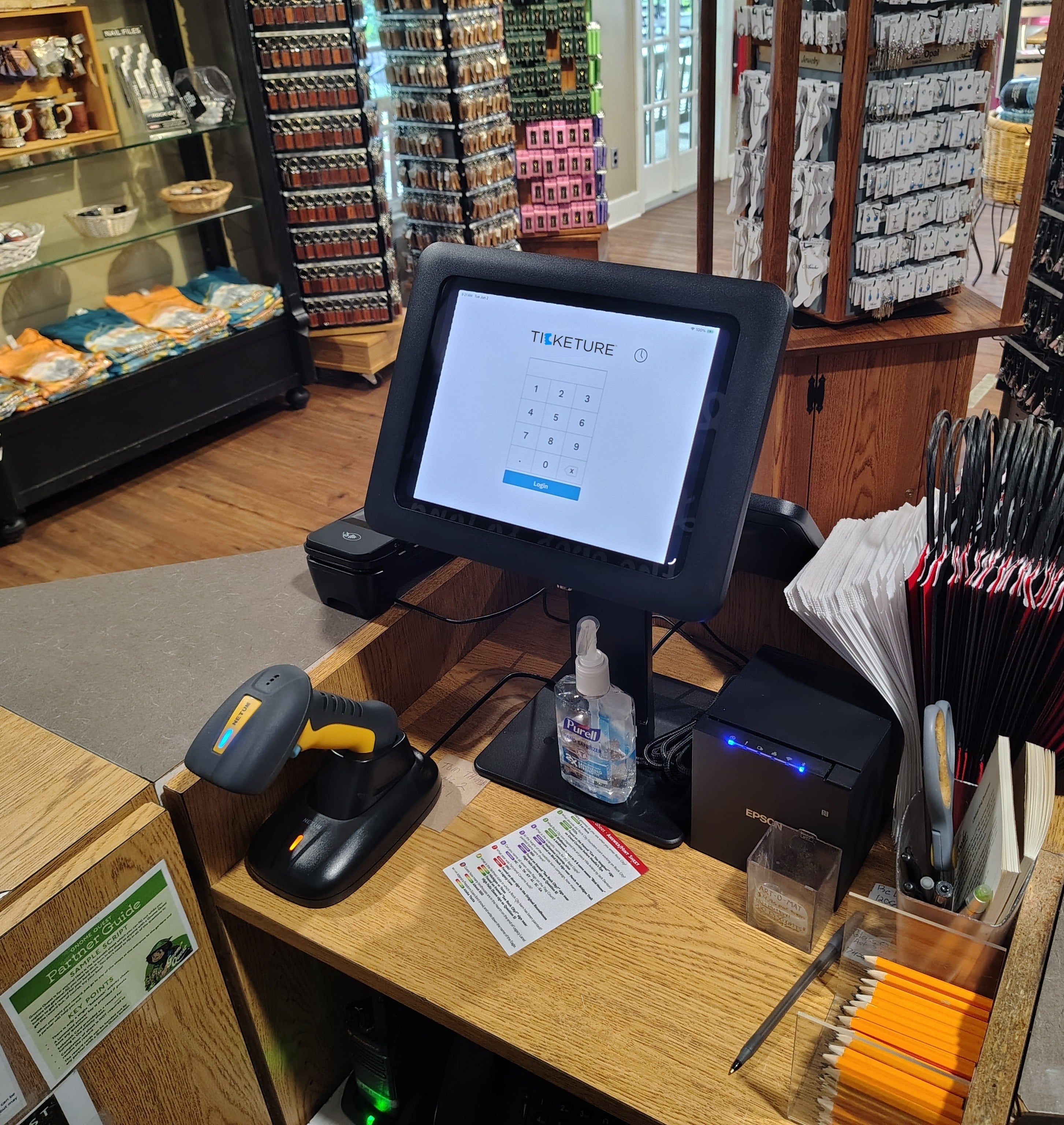
Platforms like Ticketure are built around the idea that the visit is one journey, not a series of transactions.
This means:
- One record per visitor across all interactions.
- Real-time visibility across online and on-site activity.
- Fewer steps for staff at the point of service.
The result is not just operational efficiency. It is a clearer path to revenue growth.
Where legacy systems create friction
Many established platforms were developed in a different context.
They often rely on multiple modules or integrations to connect admissions, POS, and fundraising. While they can support complex organizations, they can also introduce additional steps in day-to-day operations.
Teams adapt to this. Workarounds become normal. Over time, those small inefficiencies compound.
High-volume throughput depends on simplicity
For museums handling large visitor numbers, speed matters.
High-volume visitor throughput is not just about how many people can enter. It is about how quickly and smoothly each interaction happens.
When systems are connected:
- Transactions are faster.
- Staff spend less time switching between tools.
- Visitors move through spaces more easily.
This creates a better experience and supports higher spend without increasing pressure on teams.
A different way to think about revenue
Museum revenue optimization is often framed around pricing or new offers. In practice, it is more often about connection.
When ticketing, POS systems for museums, memberships, and donations are unified, the museum can see and influence the full journey.
That makes it easier to:
- Increase per-visitor revenue.
- Grow membership conversion.
- Improve donation participation.
Not through disruption, but through removing friction.
Bringing it together
The challenge is not adding more systems. It is making the existing journey work as one.
Modern museum ticketing software is moving in that direction. By connecting admissions, POS, memberships, and giving within a cloud-based platform, museums can reduce operational pressure while creating more opportunities to grow revenue.
For teams looking to simplify this, platforms like Ticketure offer a more unified approach. You can explore how it works in practice or see how similar museums are approaching it.
Read the Liverpool Museums case study or book a short demo to see how this works in practice.