Where entry friction is slowing down your entire operation
Visitors expect arrival to feel easy. They want to book on their phone, find their ticket quickly and get through the door without friction. But for cultural and visitor attractions, even small delays at entry can quickly ripple across the day. A missing ticket, a slow scan, an unclear arrival message or a manual membership check can all add pressure to queues, staff and the wider visitor experience. Getting people through the door matters, but making those first few minutes feel smooth can shape everything that follows.
The hidden cost of slow entry
Entry is often treated as a front-of-house issue. But when it slows down, the impact rarely stays at the door.
A few extra seconds spent finding a ticket, checking a booking or validating a pass may not seem significant. Repeated across hundreds or thousands of visitors, those small delays become a much bigger operational problem.
Lines grow. Staff become stretched. Visitors become less patient. Teams spend more time solving avoidable issues and less time creating the kind of warm, helpful, memorable welcome that turns a visit into a great experience.
That is the hidden cost of slow entry.
It is not just about how quickly tickets are scanned. It is about what staff are able to do when they are not constantly managing lines, searching for information, or fixing preventable issues.
When front-of-house teams are freed from unnecessary pressure, they have more time to create personal moments with visitors: answering questions, helping families feel settled, recognizing members, supporting accessibility needs, or simply making someone feel welcome.
In the attractions world, people often talk about the power of creating “Disney moments” — those small, thoughtful interactions that feel personal and memorable. Cultural attractions have their own version of that. A staff member who remembers a member. A volunteer who helps a child feel excited about an exhibit. A front-of-house team member who turns a confusing arrival into a calm, reassuring welcome.
Those moments are harder to create when teams are focused on recovering the line. Reducing friction gives staff more room to be human.
Where the friction starts
Entry delays are often treated as a front-of-house problem, but the cause usually starts earlier in the journey.
It may begin when a ticket is booked online. It may come from unclear communications. It may sit in the way timed entry is configured. It may be caused by scanning workflows that are too slow, too manual, or too dependent on staff intervention.
In many attractions, the friction is not one major failure.
It is a collection of small gaps, here are 4 key examples:
1. Visitors do not have the right information at the right time
A smooth arrival starts before the visitor reaches the entrance.
If confirmation emails are missed, arrival instructions are unclear, time slots are not reinforced, or important information sits too far down the email, staff often have to manage the consequences on the day.
Visitors may arrive at the wrong time. They may not know which entrance to use. They may not have their QR code ready. They may be unsure what is included in their ticket.
This is where pre-visit communication matters. Are you sending contextually aware reminders to your visitors?
Tip: Email and SMS reminders can help reduce uncertainty before visitors arrive. A timely message with clear arrival instructions, ticket links, time slot details, and practical information can make the difference between a confident arrival and a line-building question.
2. Timed entry is configured, but not operationally connected
Timed entry is designed to control visitor flow.
But timed entry only helps if it is connected to how visitors actually arrive, how staff manage exceptions, and how capacity is monitored across the day.
If time slots are too rigid, visitors who arrive early or late can create pressure. If capacity rules are too broad, busy periods can still become congested. If front-of-house teams cannot quickly see what is expected, they lose confidence in the schedule.
It also means recognizing that not all visitors arrive in the same way. Large groups, school visits, tours, and special bookings often need a different entry experience than individual visitors or families. Separate group entry lanes, dedicated check-in points, or clearly scheduled group arrival windows can help teams process larger parties efficiently without slowing down general admission visitors.
Good timed entry should support operational flow, not create another layer of administration. Do you have conflict avoidance capabilities built into your booking system?
Tip: Give teams the ability to manage time slots, capacities, availability, and visitor movement in a way that reflects how the site actually operates.
3. Scanning is slower than the queue
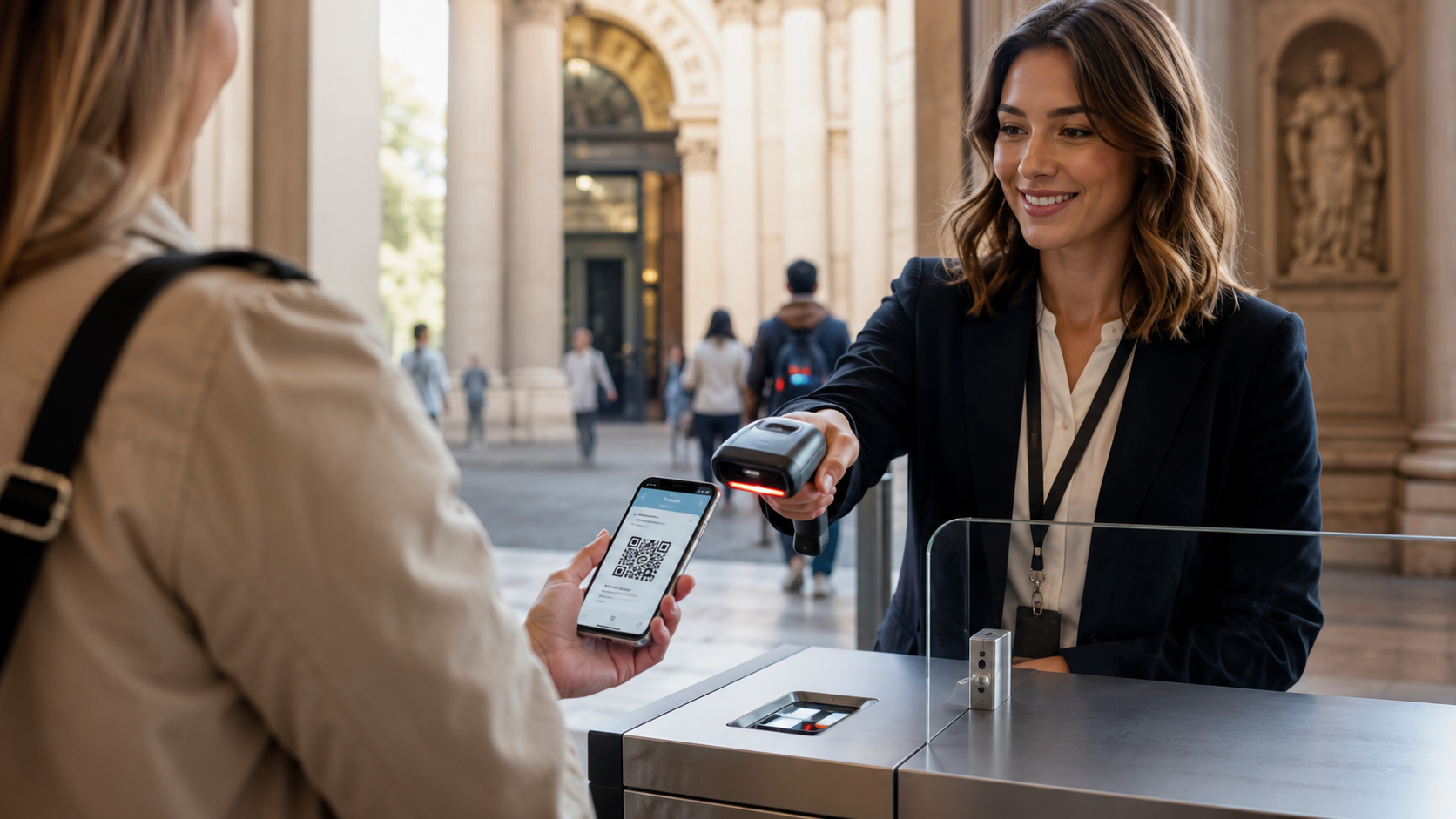
Scanning should be the simplest part of the visit.
But delays can appear when devices are slow, tickets are difficult to read, group bookings take too many steps, membership passes need manual checking, or staff have to move between systems to confirm whether someone can enter.
If every scan creates a decision, the line slows down. If the system gives staff clear answers, the operation keeps moving.
The more manual the process, the more pressure builds. Do you have Apple or Google wallet tickets integrated that surface based on proximity to the site?
Tip: For high-volume attractions, scanning needs to be fast, reliable, and simple for staff to use. It should validate the ticket, recognize the correct time window, support group entry where appropriate, and give clear information when there is an exception.
4. Entry teams cannot see the full picture
Front-of-house teams often carry the pressure of operational decisions without always having the information they need.
How many visitors are expected in this time slot? How many have arrived? Which groups are due? Are there school bookings today? Are members included in the expected flow? Is there a peak coming in the next hour?
When this information is hard to access, staff rely on experience, judgement and manual communication.
That can work, but it is fragile. Do you have access to real-time personalised dashboards to support the daily flow of visitors?
Tip: Clear operational reporting helps teams prepare, adjust, and respond during the day. The more visible the flow of visitors is, the easier it becomes for staff to manage lines, support different arrival types, and make informed decisions.
The wider cost of a slow entrance
Entry friction is not just a line problem. It can affect revenue, staffing, visitor sentiment, and the rest of the visit.
If visitors spend longer waiting, they have less time and patience for shops, cafés, donations, memberships, or add-on experiences. If staff spend more time resolving entry issues, they have less capacity to encourage upgrades, support visitors, or manage exceptions well.
Slow entry also shapes perception.
A visitor may still enjoy the attraction, but a difficult arrival can color the whole experience. It can make the organization feel less organized than it is. It can put pressure on teams who are already managing complex operational demands.
For attractions working hard to increase visitor satisfaction and on-site revenue, entry is not just an operational detail. It is part of the commercial journey.
Why it matters
Slow entry is not just an operational inconvenience.
The impact of entry friction becomes clearer when you look at the numbers. Small delays add up quickly. If an avoidable issue adds just 15 seconds to each visitor interaction, that becomes more than four hours of additional line-handling time across 1,000 arrivals.
That is time absorbed by visitors waiting, staff managing pressure, and teams trying to keep the day moving.
For larger attractions, peak days can turn small inefficiencies into major operational drag very quickly.
This is why entry flow deserves strategic attention. The goal is not only to scan tickets faster. It is to remove avoidable friction from the entire arrival journey, so staff can spend less time recovering the line and more time creating the kind of personal, thoughtful experiences visitors remember.
What better entry flow looks like
A smoother entry experience usually comes from connecting three things:
-
Clear pre-visit communication
-
Flexible timed entry management
-
Fast, reliable validation at the point of arrival
When those areas work together, visitors arrive better prepared, staff have clearer information, and entry becomes easier to manage.
That might mean confirmation emails or SMS that make ticket access simple. Timed entry rules that reflect real visitor flow. Scanning tools that validate quickly. Separate group entry lanes or dedicated check-in flows for large parties. Operational dashboards that show expected arrivals. Staff workflows that reduce manual checking.
None of this needs to make the experience feel more transactional. In fact, the opposite is true. When the operational layer works properly, staff have more room to be human, helpful, and welcoming.
The Ticketure view
Ticketure is designed to support high-volume visitor attractions where entry flow, timed admission, group bookings, memberships, donations and reporting need to work together.
Features such as timed entry, digital wallet ticketing, QR code scanning, SMS communications, membership validation, group booking tools and real-time operational visibility can help reduce friction across the arrival journey.
The aim is not just to process visitors through the entrance. It is to help teams create a calmer, more confident start to the visit, while protecting operational flow throughout the day.

"33% reduction in calls & emails to customer service department due to Ticketure’s intuitive online buying experience."
Tennessee Aquarium
Vice President Guest Experience
The takeaway
Entry friction rarely looks like one big problem. It usually looks like small delays, repeated many times.
A missing ticket. A late arrival. A manual check. An unclear email. A slow scan. A staff member searching for information.
Together, those moments can slow down the entire operation.
For cultural and visitor attractions, improving entry flow is not only about reducing queues. It is about protecting staff time, improving visitor confidence, supporting commercial opportunities and making the whole day run more smoothly.
If entry is the first operational test of the visit, it is worth asking:
Is it helping the rest of the day flow, or quietly slowing it down?
.png?width=1672&height=941&name=ChatGPT%20Image%20Jun%2011%2c%202026%2c%2010_50_06%20AM%20(3).png)
.svg)